Patients ask me about psilocybin therapy more than they used to. The research is real (JAMA Psychiatry and NEJM trials in treatment-resistant depression and end-of-life anxiety), the FDA has granted Breakthrough Therapy designation, and state-legal supervised programs now exist in Oregon and Colorado. There's also a growing underground of "retreats" and self-dosing that operates outside any clinical container.
I don't offer psilocybin therapy. No primary care physician does. What I can do is give you a grounded clinical read on what the evidence actually shows, who's a reasonable candidate, what the contraindications are, what legitimate access pathways exist, and what to ask before doing anything else. Here's that read.
TL;DR
- I don't offer psilocybin therapy. The point of this post is honest physician-grade context for patients asking about it.
- The evidence is real for treatment-resistant depression and end-of-life anxiety in cancer patients (JAMA Psychiatry 2016/2021, NEJM 2018/2021). Earlier-stage data for addiction and PTSD.
- "Treatment-resistant" means two or more failed adequate trials of conventional antidepressants. Psilocybin is not a reasonable first-line treatment for depression.
- Strict contraindications: personal/family psychosis or schizophrenia history, active bipolar without stabilization, severe cardiovascular disease, active SSRI/SNRI use without taper, pregnancy
- Legitimate U.S. access today is through clinical trials or state-supervised programs (Oregon, Colorado). Underground use is outside the clinical context and I can't recommend it.
- For my patients asking, the conversation is about whether they're an appropriate candidate, what conventional options are still on the table, and what legitimate referral pathways exist
- To reach the practice: call 561-468-6981
A short history
Psilocybin is a naturally occurring compound in certain mushrooms, used for thousands of years in ceremonial and medicinal contexts, particularly in Mesoamerica. Western clinical research began in the 1950s and 1960s with promising results for depression, anxiety, and addiction, then ended abruptly in the early 1970s when psychedelics were classified as Schedule I in the United States. That classification halted nearly all research for roughly four decades.
Research restarted in the early 2000s, mostly at academic institutions (Johns Hopkins, NYU, Imperial College London, Yale), using modern trial methodology. That research is what the current conversation is based on.
What the research actually shows
The core findings, from peer-reviewed published trials:
- JAMA Psychiatry, 2016. A single dose of psilocybin, combined with psychological support, produced significant reductions in depression and anxiety in patients with life-threatening cancer. Effects lasted up to six months.
- New England Journal of Medicine, 2018. Substantial reduction in depressive symptoms in patients with treatment-resistant depression.
- JAMA Psychiatry, 2021. Meaningful reductions in symptoms of major depressive disorder with psilocybin-assisted therapy.
- NEJM, 2021. Psilocybin compared favorably to escitalopram (a standard SSRI) for depression, though the trial had specific design limitations worth understanding.
The FDA has granted Breakthrough Therapy designation for psilocybin in depression. That's a regulatory recognition that the evidence is promising enough to warrant expedited review. It is not approval.
How it works
Psilocybin (really its active metabolite, psilocin) binds primarily to the serotonin 5-HT2A receptor. The clinically relevant effects are thought to include:
- Temporary disruption of the Default Mode Network, the brain's self-referential resting state
- Reduced rumination and self-focused thinking
- Increased neuroplasticity for a period after dosing
- Heightened emotional processing and accessibility of memories
- In some patients, a mystical or ego-dissolving experience that is strongly associated with therapeutic outcomes
The effects last four to six hours. The clinically meaningful outcomes tend to appear not during the experience itself but in the weeks that follow, when integration of the experience can reshape cognitive and emotional patterns.
The therapeutic model
Clinical psilocybin treatment is structured, not recreational. In research protocols, it involves three phases:
Preparation. Typically several sessions with a trained therapist before dosing, establishing rapport, setting intentions, and screening for contraindications.
Dosing. A supervised session (usually 6 to 8 hours) in a controlled environment with two trained facilitators, specific music, and intentional structure.
Integration. Follow-up sessions after dosing to process the experience and translate insights into behavioral changes.
The therapy part is not optional. The drug alone, without the structure, produces very different outcomes from the drug within the therapeutic container.
Risks and who should not use it
Contraindications are important:
- Personal or family history of psychosis or schizophrenia. Psilocybin can precipitate or worsen psychotic symptoms.
- Active bipolar disorder, particularly without mood stabilization
- Active severe cardiovascular disease (psilocybin raises heart rate and blood pressure transiently)
- Use of SSRIs or SNRIs can blunt effects or raise risk of serotonin syndrome; these usually need to be carefully tapered before dosing
- Pregnancy
Psychological risks include challenging experiences (fear, anxiety, or confusion during the session), which are usually manageable in a controlled setting but can be destabilizing in unsupervised contexts. Physical risks are low when appropriate screening and monitoring are in place.
Who might be an appropriate candidate
Current research is most mature for:
- Treatment-resistant depression
- End-of-life anxiety and existential distress in cancer patients
- Some evidence for addiction (alcohol use disorder, tobacco) and PTSD, though these are earlier in development
"Treatment-resistant" is a specific clinical designation. It typically means having failed two or more adequate trials of conventional antidepressants. Psilocybin is not a reasonable first-line treatment for depression. (How depression and anxiety care work in concierge primary care, including conventional first-line options.)
The access question
FDA approval for any psilocybin indication has not happened as of this writing, though it may within the next few years. In the interim, legitimate access in the United States is through clinical trials (which have specific eligibility criteria) or, for certain indications, through state-level psilocybin programs (Oregon and Colorado have legal frameworks for supervised use, with limitations). Florida currently has no state-legal pathway.
Underground psilocybin use, including unsupervised "retreats" and self-dosing, is outside the clinical research context. The risk profile is different. I can't recommend it and can't pretend otherwise.
How I approach this with patients
For patients asking about psilocybin for a specific condition, the conversation is about whether the condition is one where evidence is strong, whether they've exhausted reasonable conventional options, whether they have contraindications, and what legitimate access pathways exist. I don't offer psilocybin therapy; no primary care physician does. For qualifying patients, the right referral is a clinical trial or a state-legal program.
For patients considering unsupervised use, the conversation is frank about the risks, what to watch for, when to seek medical attention, and what harm-reduction principles apply. Pretending the phenomenon doesn't exist doesn't protect anyone.
The future
Research is continuing. If current Phase 3 trials replicate earlier findings, FDA approval for treatment-resistant depression is plausible within a few years. That would change access significantly. Integration into mainstream psychiatric practice will take longer and will require substantial training and infrastructure.
In the meantime, the evidence base is what it is: promising for specific indications, not yet mature enough to justify broad enthusiasm, and meaningful enough to warrant continued serious research.
Frequently Asked Questions
Can you prescribe psilocybin?
No. Psilocybin remains Schedule I federally, which means it has no accepted medical use under DEA classification and cannot be prescribed by any physician outside of a registered clinical trial or a state-legal supervised program. That's true for primary care, psychiatry, and every other specialty.
Is it legal in Florida?
No. Florida has no state-legal pathway for supervised psilocybin therapy. The two states with legal frameworks for supervised adult use are Oregon (since 2023) and Colorado (rolling out under the Natural Medicine Health Act). Both require in-state participation at licensed facilities.
What does "Breakthrough Therapy" designation actually mean?
It's an FDA mechanism to expedite review of drugs that show preliminary evidence of substantial improvement over existing treatments for serious conditions. Psilocybin has received this designation for treatment-resistant depression. It is not approval; the drug still has to complete Phase 3 trials and satisfy FDA review. It signals "promising enough to fast-track," not "ready for clinical use."
How is psilocybin therapy different from ketamine therapy?
Different drug, different mechanism, different access status. Ketamine is FDA-approved for anesthesia and (as esketamine) for treatment-resistant depression. Off-label IV ketamine and intranasal esketamine are accessible through specialty clinics today. Psilocybin remains research-only or state-program-only. Both are being studied for similar indications, but the access pathways and supervision structures are very different.
What if I'm interested in trying it through a retreat or underground source?
The conversation I'd want to have first covers: do you have any of the contraindications listed above (psychosis history, bipolar, severe CV disease, current SSRI/SNRI), what condition you're hoping to address, what conventional options you've actually tried, and what harm-reduction information you're working with. I won't pretend the underground doesn't exist, but I also won't recommend it. The risk profile outside a clinical container is meaningfully different.
Is psilocybin addictive?
No, in the conventional sense. Psilocybin doesn't produce physical dependence or compulsive use patterns characteristic of addictive drugs, and tolerance develops rapidly enough that frequent use produces diminishing effects. That said, "not addictive" is not the same as "no risk"; the psychological risks are real, particularly in unsupervised contexts.
How to think about a physician who'll talk through emerging treatments
The criterion isn't whether the physician offers every emerging therapy themselves. It's whether they'll engage seriously with what you're asking about, give you an honest read on the evidence, identify contraindications, and help you find legitimate pathways if a referral fits. A 7-minute traditional visit usually doesn't accommodate that kind of conversation. (Full criteria for evaluating any concierge practice.)
About the Author
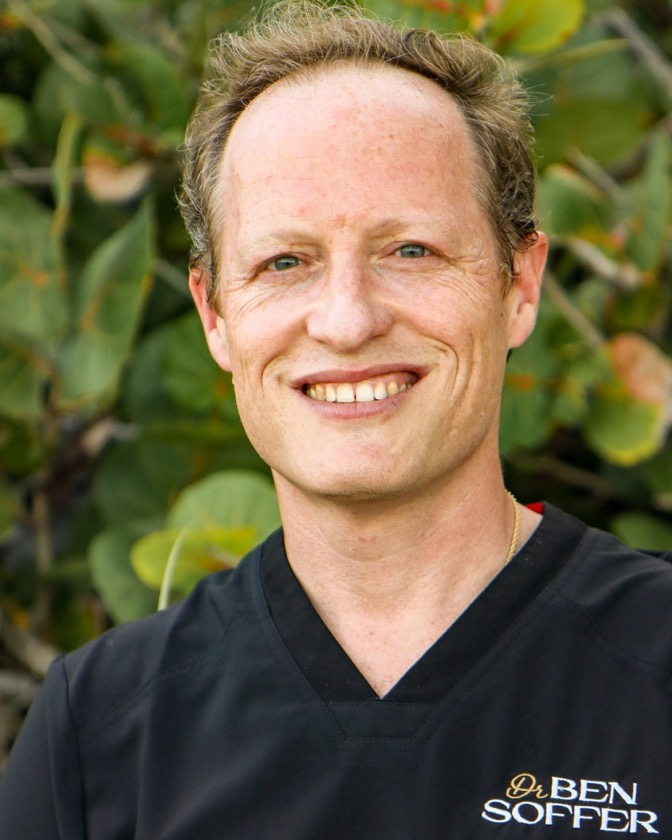
Dr. Ben Soffer, DO is a board-certified physician practicing concierge primary care in Boca Raton, Florida. He keeps his practice intentionally small, which is what makes the kind of in-depth conversations described above (about emerging treatments, evidence, contraindications, and referral pathways) possible during a regular visit rather than a separate consult.
If you want an honest physician's read on something emerging
A no-obligation conversation about your specific situation, including questions about therapies I don't personally offer.
- Call: 561-468-6981
- Email: info@drbensoffer.com
- Or reach out through the contact form