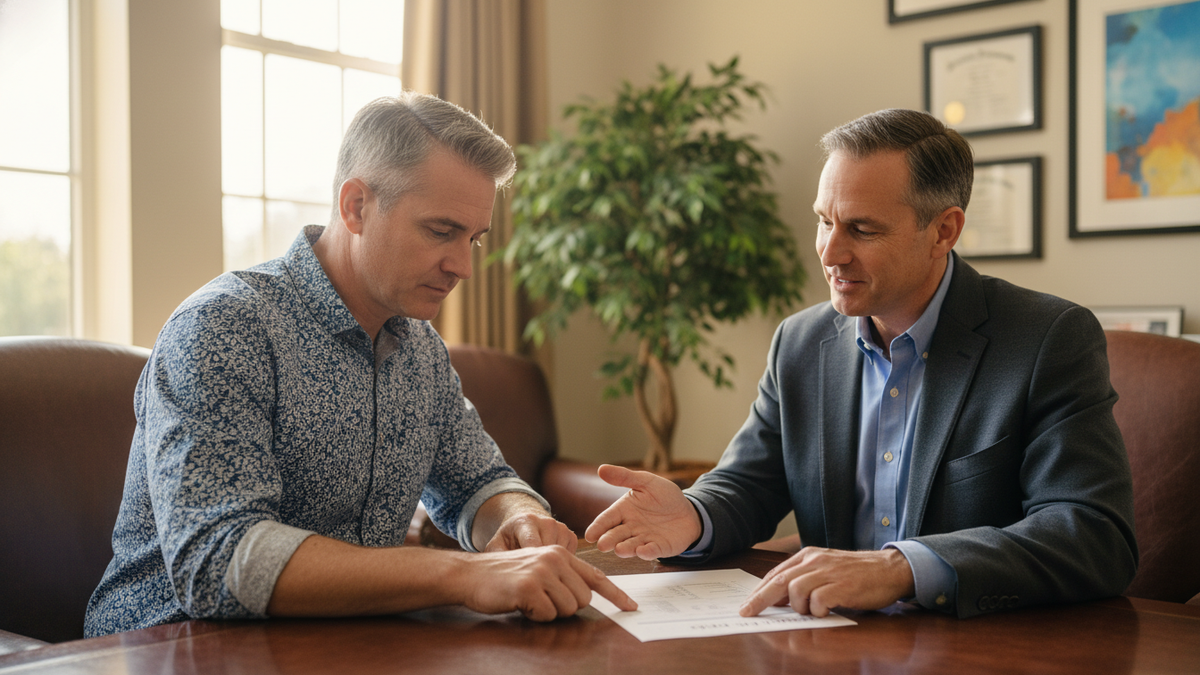
One of the most common conversations I have with my male patients over 40 starts the same way. They describe fatigue that coffee doesn't fix, a shrinking interest in things they used to enjoy, difficulty maintaining muscle despite regular exercise, and mood changes that don't feel like them. Someone has usually told them this is just aging. That's not the whole story, and it's not a useful answer.
TL;DR
- Testosterone declines about 1% per year starting around 30, but individual variability is large; symptoms matter more than a single number
- Real signs to investigate (especially several together): persistent fatigue, decreased muscle/strength, midsection weight gain, reduced libido, mood changes, brain fog, decreased bone density, sleep disturbance
- A serious workup is comprehensive: total T, free T, SHBG, estradiol, LH/FSH, thyroid, A1C, fasting insulin, lipids with particle analysis, inflammation, plus the lifestyle context (sleep, stress, alcohol, body composition)
- Treatment isn't automatic. TRT can be a real fix for the right patient, but for some men the answer is lifestyle first (sleep, alcohol, body composition) with a retest before medication
- Beyond testosterone, the 40+ visit should also cover cardiovascular risk, metabolic risk, cancer screening, and mental health
- To reach the practice: call 561-468-6981
What happens to testosterone in midlife
Testosterone levels in men start a slow decline around age 30, usually about 1 percent per year. By the 40s, 50s, and 60s, the cumulative drop can be significant. The rate varies a lot between individuals. Genetics matter, but so do sleep quality, stress, body composition, diet, alcohol, and exercise. Two men the same age can have testosterone levels that differ by a factor of two, and the one with the lower level may or may not be symptomatic depending on the rest of the picture.
I see the full spectrum. Some men stay robust into their 70s. Others are notably low at 45. The useful question isn't "what's the average curve." It's what's happening in your specific body and whether it explains the symptoms you're actually having.
Signs worth investigating
Symptoms of low testosterone can be subtle and easy to attribute to something else. When several appear together, they often point to hormonal changes worth checking:
- Persistent fatigue despite adequate sleep
- Decreased muscle mass and strength, even with regular exercise
- Increased body fat, especially around the midsection
- Reduced libido and changes in sexual function
- Mood changes: irritability, low motivation, or low-grade depression
- Difficulty concentrating or "brain fog"
- Decreased bone density
- Sleep disturbances
When patients describe these, I take them seriously. The goal isn't to chase a single number. It's to understand what's actually happening and what, if anything, warrants treatment.
How I approach the workup
One of the advantages of having time is getting the testing right. I don't order a single morning testosterone and call it a day. Hormones exist in an interconnected system and understanding that system takes a fuller panel.
What I typically check: total testosterone, free testosterone (the biologically active form), SHBG (sex hormone-binding globulin), estradiol, LH and FSH (to distinguish whether the issue is in the testes or the pituitary signaling), thyroid function, comprehensive metabolic panel, A1C and fasting insulin, lipid panel with particle-size analysis, and inflammatory markers. We also talk through sleep quality, stress, medications, and alcohol, all of which move these numbers. (How sleep itself directly affects testosterone and metabolic health.)
The labs alone don't drive the decision. The labs plus the clinical picture plus your goals drive the decision.
Treatment and the honest version of that conversation
If the labs confirm genuinely low testosterone and there are symptoms affecting quality of life, we have a detailed conversation about options. Testosterone replacement therapy can be a real fix for the right patient: better energy, improved body composition, better mood, better sleep. Done properly, it works.
It's not automatic, though. Testosterone therapy requires ongoing monitoring of labs and symptoms. It affects fertility; for men who still want children, that's a specific conversation. There are cardiovascular considerations and prostate considerations that have to be worked through, especially for older patients. For some men, the right answer is lifestyle first: fix the sleep, address the alcohol, improve body composition, and retest before considering medication. Lifestyle changes can meaningfully raise testosterone, and sometimes they're enough.
The approach for a 45-year-old executive with chronic work stress and poor sleep is different from the approach for a 60-year-old retiree whose symptoms have been worsening for years. The right plan is the one matched to your specific situation, not a protocol applied blindly. (How chronic stress drives this same hormonal and cardiovascular pattern.)
Beyond testosterone
Testosterone gets most of the attention in men's-health conversations, which is fair but incomplete. In the same annual visit I'm usually looking at cardiovascular risk (lipid panel with particle analysis, ApoB, blood pressure trends, coronary calcium scoring for appropriate patients), metabolic risk (A1C, fasting insulin, body composition), cancer screening calibrated to family history and risk (colonoscopy, skin exam, lung screening where indicated, prostate workup after a real conversation about the tradeoffs), and mental health. The things men are most likely to die of or be debilitated by are almost always preventable or manageable when caught early. (Full breakdown of what an executive-level annual physical actually includes.)
For men who've spent decades prioritizing everything other than their own health, this kind of systematic review is overdue. The earlier in the 40s you start it, the more you get out of it. (Full age-by-age preventive screening framework.)
Frequently Asked Questions
What testosterone level is considered "low"?
Lab reference ranges typically define low total testosterone as below 300 ng/dL, but the right threshold for treatment isn't a single number. A man at 320 ng/dL with significant symptoms may benefit from intervention; a man at 280 ng/dL who feels fine may not need anything. Free testosterone (the biologically active fraction) often tells a more useful story than total. The diagnosis of low testosterone requires both consistently low labs AND symptoms; either alone usually isn't enough to justify treatment.
What's the difference between TRT clinics and a primary care physician managing testosterone?
TRT clinics specialize in testosterone optimization, often with a streamlined workflow that gets you on therapy quickly. Primary care physicians (concierge or otherwise) treating testosterone have the advantage of integrating it with the rest of your health: cardiovascular risk, metabolic markers, cancer screening, sleep, mental health, and lifestyle. The risk with TRT-clinic-only management is missing the broader picture or undermonitoring the downstream effects of therapy. The right setting depends on whether you want focused testosterone work or testosterone management as part of comprehensive primary care.
Will testosterone therapy increase my heart attack risk?
The evidence has evolved. Earlier observational studies raised concerns; more recent randomized data (TRAVERSE trial, 2023) found no significant increase in major cardiovascular events with TRT in men with hypogonadism and existing CV risk. That said, TRT does require monitoring of hematocrit (red blood cell concentration, which can rise on therapy and increase clot risk), blood pressure, and lipids. The honest framing is: in appropriately selected and monitored men, the cardiovascular risk concern is much smaller than once believed.
Will testosterone therapy affect my fertility?
Yes. Exogenous testosterone suppresses the hormonal signaling that drives sperm production. For men who want to maintain fertility, alternatives like clomiphene or HCG (alone or alongside testosterone) can preserve sperm production. This is a specific conversation that needs to happen before starting therapy, not after. For men past childbearing intent, fertility suppression is usually not a concern.
How does TRT affect prostate cancer risk?
The historical concern that TRT promotes prostate cancer has been substantially revised. Current evidence does not show that TRT causes prostate cancer in men without preexisting cancer. It does require active monitoring with PSA and clinical exam, particularly in the first year. For men with a history of treated prostate cancer, the conversation is more nuanced and warrants involvement of urology.
Can lifestyle changes really raise testosterone meaningfully?
Yes, in many men. The biggest movers: improving sleep quality (poor sleep dramatically suppresses T), losing visceral fat (adipose tissue converts T to estradiol), reducing alcohol (suppresses production), strength training (raises both acute and chronic T), and managing chronic stress (high cortisol suppresses T). For men whose T is borderline-low and whose lifestyle has gaps in these areas, addressing the lifestyle first often raises T enough to make medication unnecessary. For men whose T is genuinely low for non-lifestyle reasons, lifestyle alone usually isn't enough.
How to evaluate any practice for serious men's health work
The criterion is whether the physician will run the comprehensive workup, integrate testosterone with cardiovascular and metabolic risk, talk through tradeoffs honestly, and consider lifestyle alternatives before defaulting to medication. Panel size below 300 is a reasonable proxy for the time required. (Full criteria for evaluating any concierge practice.)
About the Author
Dr. Ben Soffer, DO is a board-certified physician practicing concierge primary care in Boca Raton, Florida. He keeps his practice intentionally small, which is what makes the kind of integrated men's-health work described above the actual operating model rather than a quick-prescribe TRT protocol.
If you've been pushing through symptoms and want a serious workup
A no-obligation conversation about your specific situation, including the honest answer about whether the symptoms you're experiencing warrant a full workup or a different starting point.
- Call: 561-468-6981
- Email: info@drbensoffer.com
- Or reach out through the contact form